
Latest Community News
Bringing communities together
Holly at Christmas
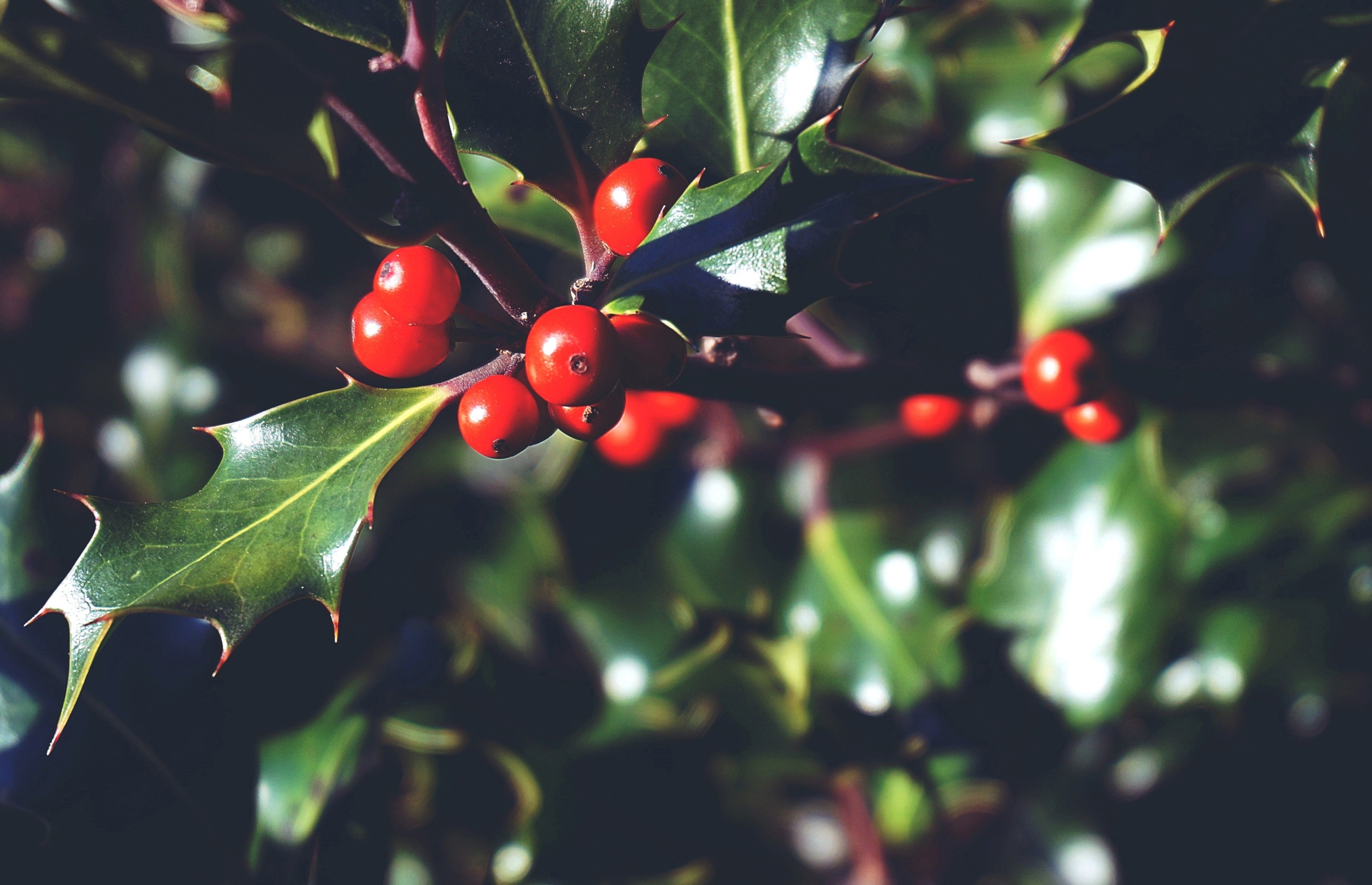
Beautiful holly in the winter sun
Whilst present year-round, holly is particularly popular during the Christmas period. With its dark green leaves and bright red berries, this distinctive plant appears in wreaths and on Christmas cards, but there is more to it than decoration.
Holly is well known for its spiky leaves, but they aren’t always spiky. Holly shrubs produce smooth leaves, but if their leaves are being eaten, they can produce spiky leaves to deter browsing animals. Sometimes, spiky leaves grow at the bottom and smooth leaves at the top. These smooth leaves are an important winter food source for deer.
Holly is dioecious, meaning male and female flowers occur on different plants. Female plants produce the striking red berries after pollination. The flowers support pollinators, while holly blue caterpillars feed on the flower buds and some moth caterpillars eat the leaves.
Birds use the dense cover of leaves and branches for nesting, while small mammals such as hedgehogs use the dry leaf litter underneath for hibernation. The scarlet berries provide winter food for small mammals, such as dormice and wood mice, as well as birds. The mistle thrush has been known to fiercely guard holly berries to prevent other birds from eating them!
Alongside its use in winter decorations, holly has been seen as a fertility symbol and a charm against goblins, witches and the devil.
Have a story to share?
Community Together welcomes positive local news,
community stories and press releases from
organisations across the areas we serve.
community stories and press releases from
organisations across the areas we serve.
Have something to share? Email us at